If you look at a quote for laminate interior doors, you will quickly notice two abbreviations: CPL and HPL. They sound technical, but the difference is simple — and it decides whether the door is right for a home, an office or a hotel.
In this guide we explain what CPL and HPL laminate doors are, when to choose one over the other, what advantages and disadvantages they have, and how they fit into a coherent project alongside the rest of the Kulttur range.
What are CPL and HPL laminate doors?
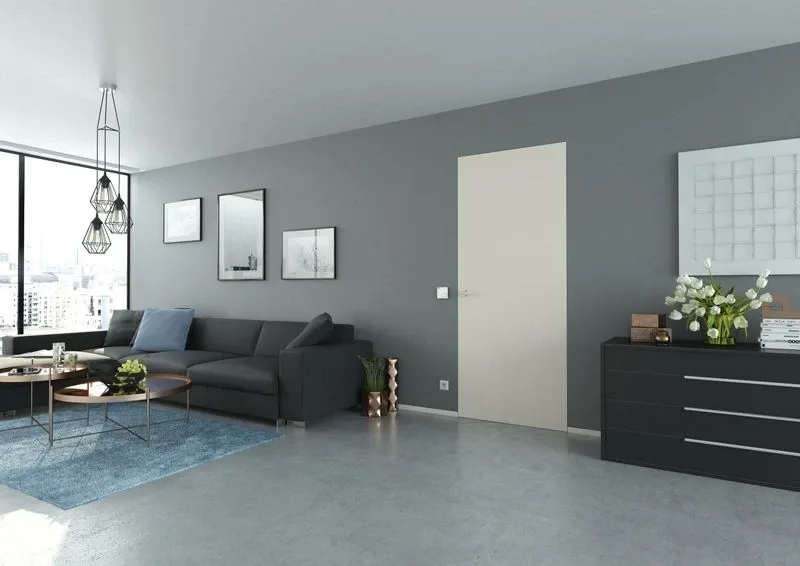
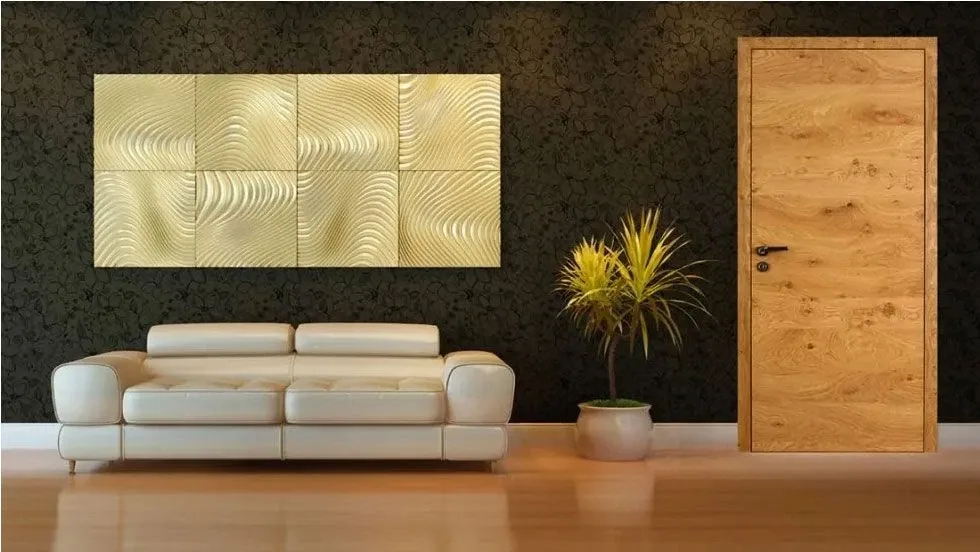
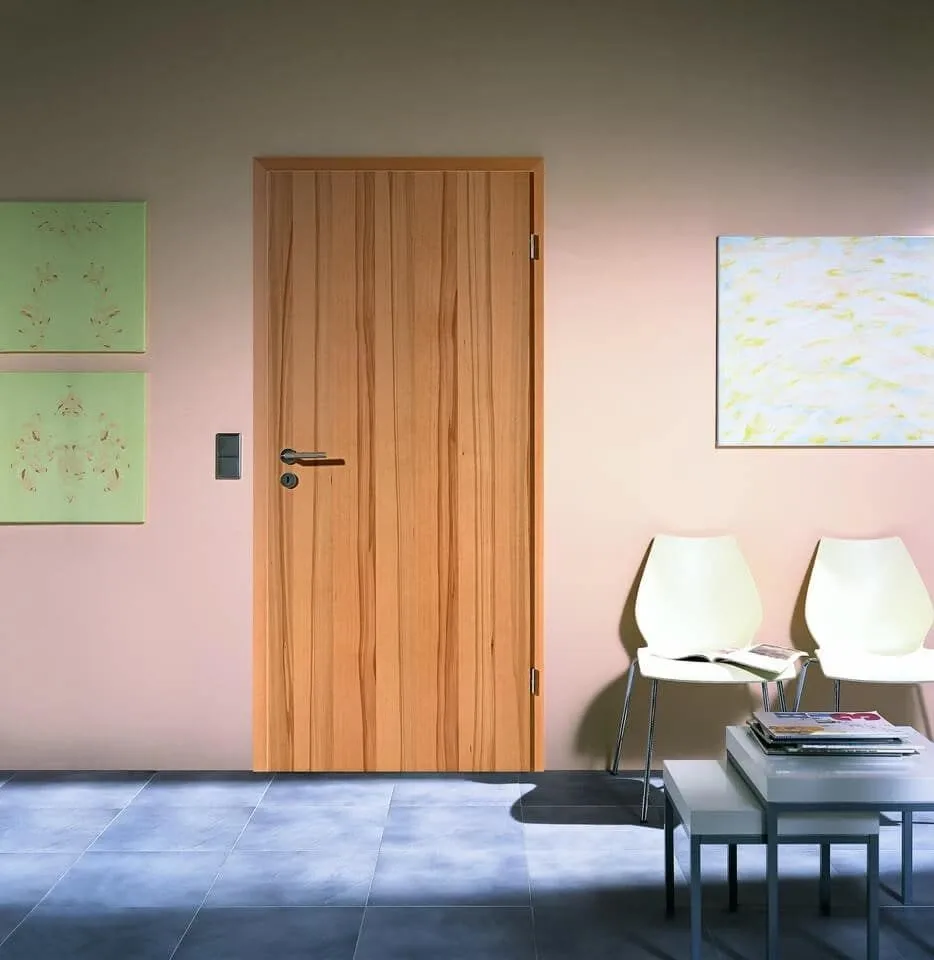
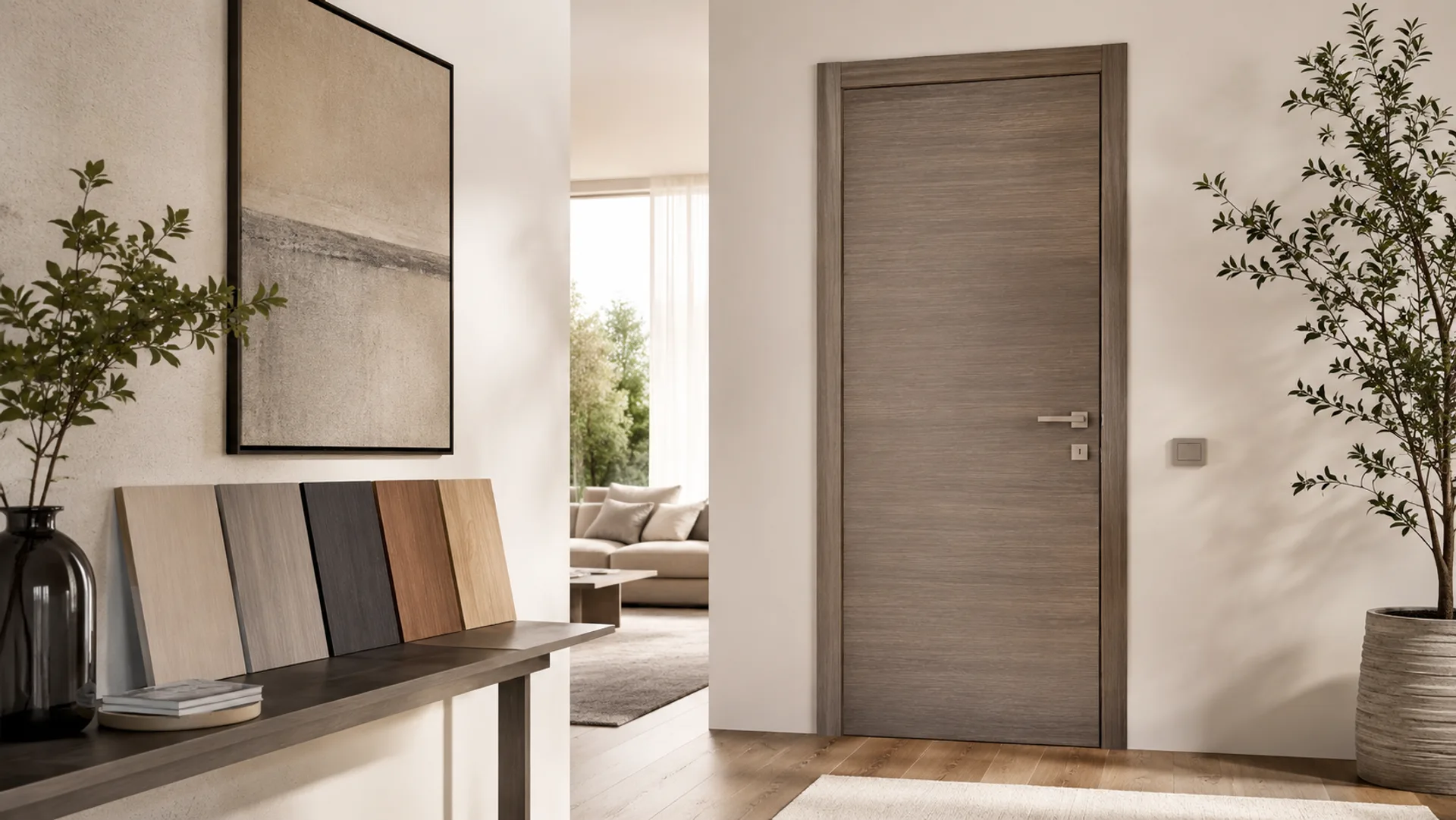
Laminate doors are interior doors whose visible surface is covered with a highly durable layer of laminate — either CPL or HPL — pressed at high temperature and pressure onto a stable core (usually MDF or engineered timber).
- CPL (Continuous Pressure Laminate) — a continuously produced laminate, slightly thinner than HPL, yet very hard-wearing for residential use and projects with medium to heavy traffic.
- HPL (High Pressure Laminate) — a high-pressure laminate, more "solid" and more robust, frequently used in spaces with intensive use: offices, hotels, institutions and communal areas.
What exactly does a CPL or HPL door mean?
The simple answer: a door whose finish is made from a highly durable laminate, tougher than ordinary paint and far more stable than many standard foils. These doors are particularly suited to:
- homes where heavy use is expected without visible marks appearing after a few years;
- bathrooms and damp spaces, when suitable laminate options are chosen and there is proper ventilation;
- hotels, offices, clinics or commercial projects where the same door has to keep looking good for a long time.
Compared with other types of door in the Kulttur collection:
- painted doors offer a very high-end aesthetic, but can be more sensitive to knocks and scratches;
- veneered doors bring natural wood texture, but call for a little more care in maintenance;
- CPL/HPL laminate doors give up a little of the "natural" look of wood, but gain a great deal in durability, stability and ease of use.
Why choose CPL or HPL laminate doors?
The advantages of HPL/CPL laminate doors
CPL and HPL laminate doors are designed for projects where service life and long-term appearance are essential:
- high resistance to scratches and impacts — ideal for families with children, pets, or office/hotel projects;
- suited to heavy traffic, both in homes and in institutional or commercial spaces;
- very good dimensional stability — the door leaf "moves" less with variations in temperature and humidity than other solutions;
- simple maintenance — easily cleaned with a soft cloth and mild products for washable surfaces;
- a wide variety of finishes — from extremely convincing wood imitations to finishes that mimic concrete, textiles or modern plain colours;
- certain models can be configured with fire resistance of up to 30 minutes, where the project calls for such performance (e.g. doors between a garage and the house, or in technical areas).
For many projects, laminate doors become the ideal standard: they look good, they perform well and they do not need frequent attention.
When laminate doors are NOT the right choice (disadvantages)
There are also situations where laminate doors are not the first option:
- the texture and appearance can feel more "technical" compared with natural wood — in projects strongly geared towards authentic materiality, veneer or solid wood may be preferred;
- they cannot be repainted as easily as a painted door — if you want to completely change the colour a few years down the line, it is more complicated than with painted doors;
- in ultra-luxury projects, where solid wood, carved panels or very special finishes are the sole aim, laminate doors may be seen as a more "functional" and less "statement" solution.
That is why, in complex projects, it is useful to combine laminate door ranges in high-traffic areas with other types of door in the spaces where you want a warmer or more luxurious note.
How do you choose a laminate door for a home or high-traffic projects?
The right choice starts with how the door will be used, not just with the model in the catalogue.
1. According to the room
- Living room — you can choose laminate doors with glass or glazed panels, to let light flow through. If the living room is connected to the hallway or kitchen, a door with frosted or clear glass can open up the space visually.
- Bedroom — solid laminate doors or doors with frosted glass are ideal, with attention paid to sound insulation. Here it is quiet that matters, not transparency.
- Bathroom — CPL/HPL laminate doors can be a very good choice if the space is properly ventilated; you can opt for frosted glass or discreet ventilation slots.
- Hallways and passageways — a solid laminate door, resistant to accidental knocks (suitcases, bicycles, children and so on).
- Home office or workspace — a solid door with good sound insulation helps concentration.
2. According to traffic
- Family with children / pets — focus on a laminate with high resistance (CPL or HPL) and colours/finishes that "hide well" the small marks of everyday life.
- Residential spaces with several users — laminate doors are often the first choice: they cope better with wear and reduce maintenance costs.
- Commercial spaces, offices, hotels — here HPL often becomes the standard, because it offers the best combination of durability and a consistent appearance over time.
3. Solid vs glazed
- Solid doors — recommended for bedrooms, bathrooms (when you do not want glass), technical rooms or spaces where privacy is the priority.
- Glazed doors — useful for living rooms, kitchens, hallways or offices where you want natural light. You can choose clear, frosted, sandblasted or decorative glass, depending on how much transparency you want.
4. Sound insulation
In bedrooms, offices and children's rooms, a laminate door with a solid structure and a correctly fitted frame offers extra acoustic comfort. A special technical door is not necessarily required; a well-chosen laminate model and professional installation can be enough for premium residential use.
Laminate doors with bespoke design
One of the great advantages of CPL/HPL laminate doors is design flexibility:
- you can choose finishes that imitate wood (oak, walnut, beech, darker species) for a warm look;
- you can opt for modern finishes — concrete, fine textures, plain colours — suited to minimalist or industrial interiors;
- the same range of finishes can be used for single doors, double doors, glazed doors or sliding doors, so that the whole project stays coherent.
If your project also includes other types of door, we help you choose the right combinations of laminate, glass and colours, so that each door quietly does its job within the whole and preserves the design.
Prices of HPL/CPL laminate doors
Prices for laminate interior doors start at approximately 385 €/door + VAT and rise depending on the level of customisation: special dimensions, laminate type (CPL vs HPL), glazing configuration, chosen hardware and any additional requirements (better sound insulation, special designs, 30-minute fire-resistant doors and so on).
Frequently asked questions about laminate interior doors
Which type of laminate door should I choose: HPL or CPL?
For homes, CPL doors offer the best price-to-durability ratio. HPL is recommended for heavy traffic (offices, hotels, public spaces) or areas where you want maximum durability.
Are laminate doors suitable for bathrooms and damp spaces?
Yes, CPL/HPL laminate doors are suitable for bathrooms if there is proper ventilation and the installation is done by the book, with hardware and materials designed for varying humidity.
Are there 30-minute fire-resistant laminate doors?
Yes, there are 30-minute fire-resistant laminate door models, specially configured for escape routes, garage-to-house passages or technical spaces, in line with the project's requirements.
How easy are laminate interior doors to maintain?
Laminate doors are very easy to maintain: they are cleaned with a soft cloth and gentle products. CPL/HPL laminate is designed to withstand scratches and daily wear.