Premium collections for doors, windows and parquet

Working on a project?

Get tailored guidance in our Bucharest showroom.

Book a visit
Interior doors with glass
Natural light

Interior doors with glass

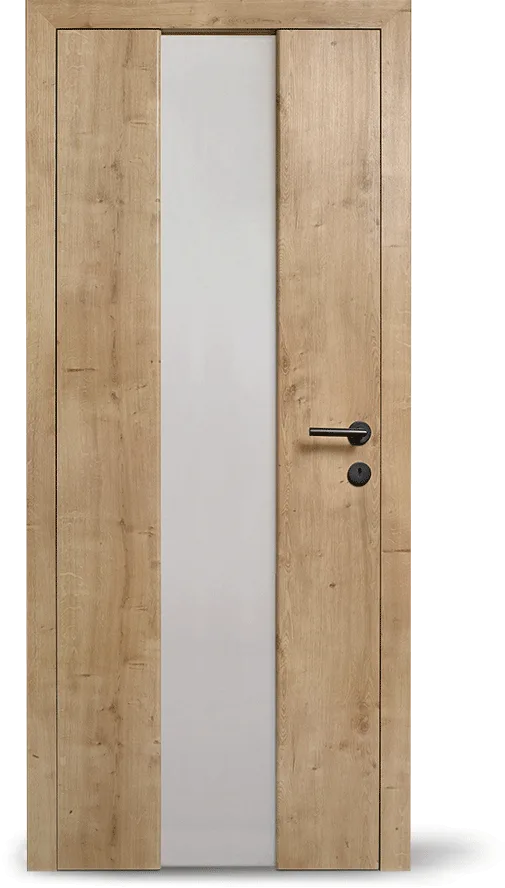
An interior door with glass does what a solid door cannot: it lets natural light flow between rooms, opens the space visually and adds a design element that turns a simple passage into a styling detail. The Kulttur collection of interior doors with glass is made to order — frosted, sandblasted, stained or clear glass, in any colour and material, on hinged, sliding or double systems.

Whether you're fitting out a premium apartment where the hallway needs light, a villa or a project with room-specific needs, each door with glass starts from a model in the made-to-order interior doors Kulttur collection.

4 tipuri
Matte, frosted, stained, clear glass
Batante/Glisante
Compatible systems
385 €
Starting price + VAT
La comandă
Per-room configuration
Manufacturer warranty
Professional installation included
Made in Austria
4.8★ from 163 reviews
Delivery 6-10 weeks

Browse products

Interior doors with glass — models

Most door models in the Kulttur collection can be configured with single, sandblasted, stained or multi-pane glass, arranged vertically or horizontally depending on the style. You can keep the same model family throughout the house and vary only the glass type per room. Interior doors with glass start from 385 € + VAT.

Why choose interior doors with glass

Compared with a solid door, an interior door with glass first brings natural light where you need it most: hallways, corridors, interior bathrooms or kitchens separated from the living. Light through the glass reduces the need for artificial lighting and makes narrow spaces feel larger. At the same time, glass visually opens the rooms and creates continuity between zones without giving up acoustic separation.

The glass type completely changes both look and function: clear glass for full visual connection (ideal in the kitchen), sandblasted for privacy with light (bedroom, office), matte for maximum confidentiality (bathroom), stained for a decorative accent (living, dining). Transparency adapts to each room and style — it is not a one-size-fits-all choice for the whole house.
Glass types for interior doors

The chosen glass type determines how much light passes through, how much you can see from one side to the other, and how the door looks on the wall. Any Kulttur model can be configured as a single door or double interior door with glass, using the same glass type across all leaves.

Interior doors with sandblasted glass — Sandblasted glass is treated chemically or mechanically to become translucent: it lets light through but blurs outlines, protecting privacy. It is the most common choice for bedrooms and offices — a balance between light and confidentiality.

Interior doors with matte glass — Matte glass has a more uniform and opaque finish than sandblasted glass, providing the highest level of privacy among translucent variants. Ideal for bathrooms, studios or spaces where privacy is priority but you don't want to give up light entirely.

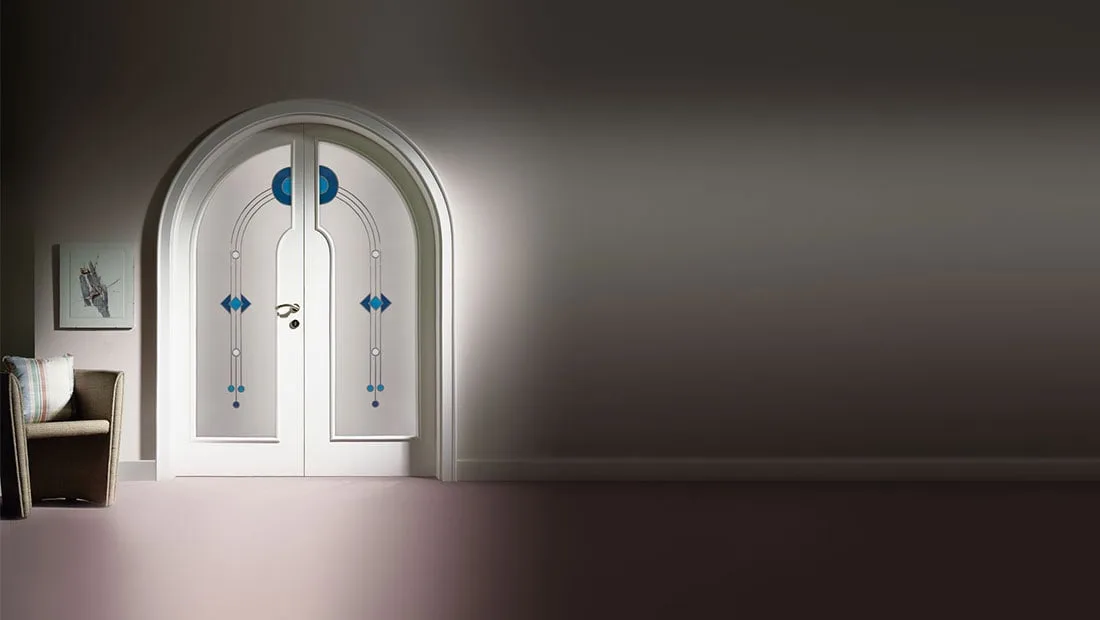
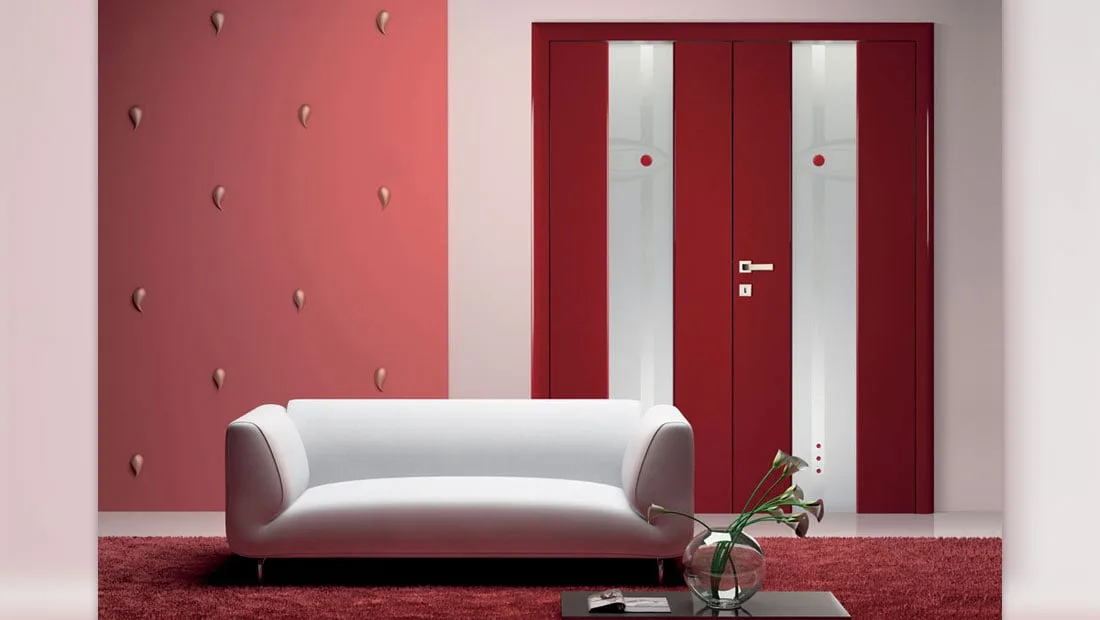
Interior doors with stained glass — Doors with stained glass add a strong decorative element: glass with coloured, textured or geometric patterns that turn the door into a visual accent. Suitable for living-room entries, dining rooms or projects with classical or eclectic architectural elements.

Interior doors with clear glass — Clear glass lets the maximum amount of light through and offers full visibility between rooms. Ideal for kitchens connected to the dining area, open offices or living rooms where you want visual continuity. On request, tempered glass is available — recommended in high-traffic projects or homes with children.

Popular configurations for interior doors with glass

Thanks to the multiple benefits of doors with glass, they are configured in dozens of variants.

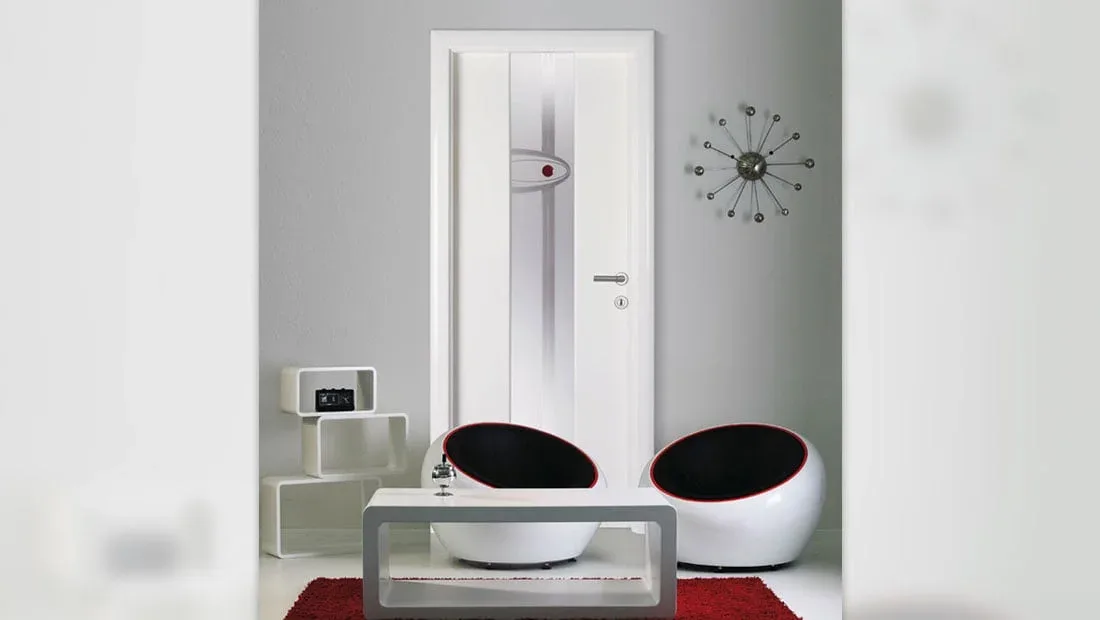
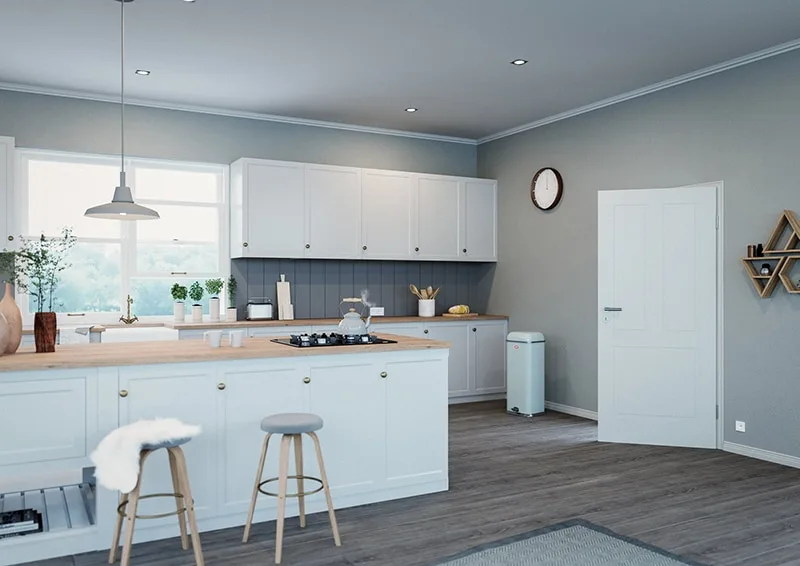
[White interior doors with glass](/{lang}/usi-interior/albe-vopsite) — White remains the most requested colour for interior doors, and a white door with glass combines chromatic neutrality with the benefit of natural light. Available in multiple shades of white and finishes (matte, glossy, satin).

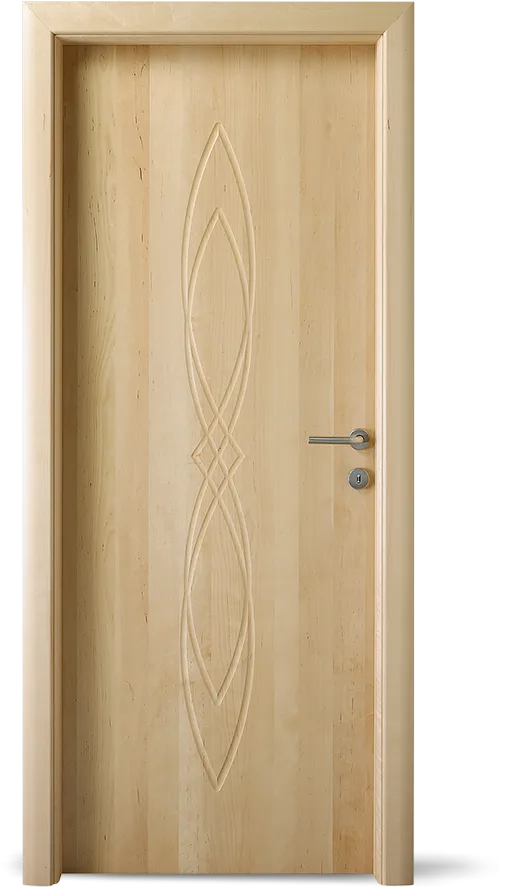
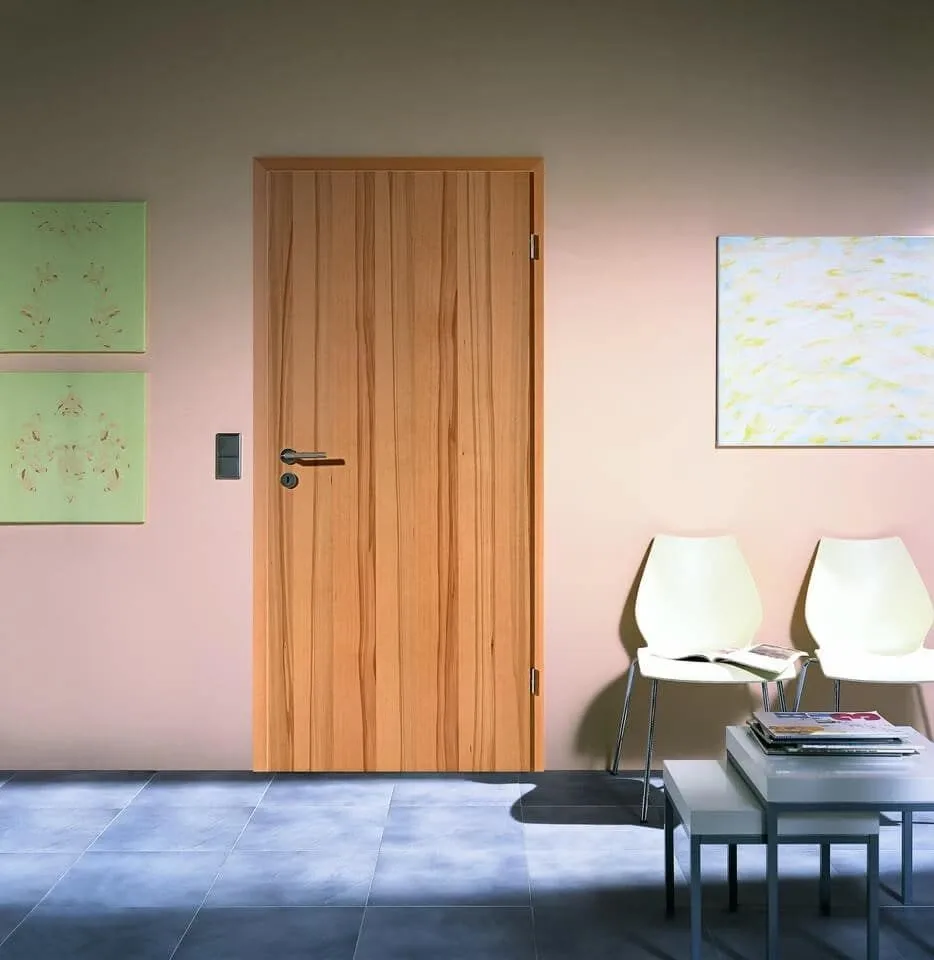
[Wood doors with glass](/{lang}/usi-interior/furnir) — A layered wood door with glass brings warmth and a natural texture impossible to replicate with other materials, and the glass adds light without compromising the warm character of the wood. Suitable for homes with natural wood floors or Scandinavian, rustic or classic styling.

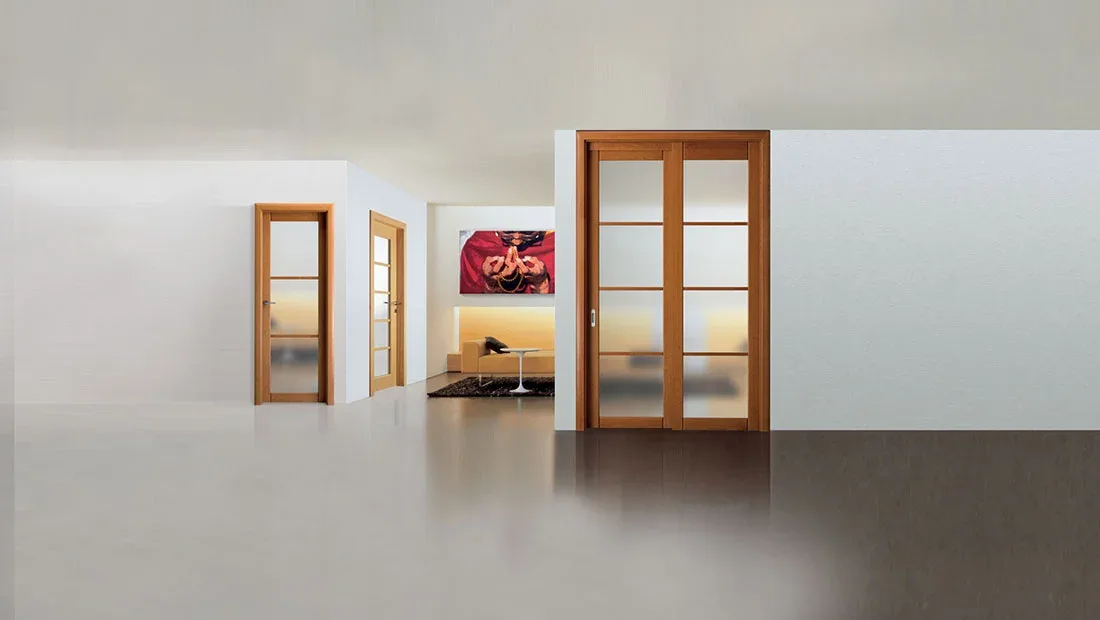
[Sliding doors with glass](/{lang}/usi-interior/usi-glisante) — The sliding system saves space, and the glass compensates for the visual barrier a solid sliding door would create. A double sliding door with glass keeps the room bright even when the door is closed — suitable for bathrooms, dressing rooms or narrow passages.

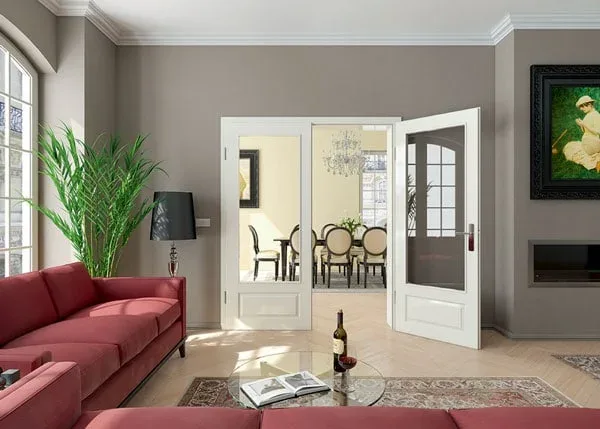
Interior doors with glass for modern interiors — In contemporary interiors, the glass door works as a subtle separation element: it divides the space without closing it. The trend toward open space increasingly translates into the use of a double interior door with arch and glass.

How to choose the right interior doors with glass

Privacy level needed — The first criterion is the privacy level you need in each room. For the kitchen or living zone, a door with clear or lightly sandblasted glass allows visual connection and maximum light. For the bedroom, a sandblasted-glass door or an invisible filomuro door is often chosen; for the bathroom, matte or fully opaque variants.

Available natural light — Rooms without a direct window, hallways, corridors and interior bathrooms benefit most from a door with glass. The larger the glazed area, the more visible the effect. If the hallway only gets light from adjacent rooms, the difference between a solid door and one with glass is considerable.

Door design and colour — Glass interacts with the door colour: on a white door the effect is bright and neutral; on natural wood the glass creates a material contrast; on a dark-painted door the glass becomes an accent. The colour is configured to order, and matching doors with flooring helps the overall coherence of the interior.

Opening system — Hinged, sliding or pivot — all opening systems are compatible with glass doors. The difference is how you interact with the glazed surface: on a sliding door the glass stays visible at all times; on a hinged door only when closed. The chosen swing direction also affects how much the glass is exposed in the room.

How interior doors with glass can be used per room

Interior doors with glass can be used in every room if you choose the right glass type.

Kitchen door with glass — The kitchen is the room where a glass kitchen door makes the most sense. The glass creates a direct visual connection with the living area: you see what's happening without opening the door, supervise the children from the living room, or simply let natural light flow. Hinged or sliding system.

Bedroom doors with sandblasted glass — The bedroom needs privacy, not transparency. A sandblasted-glass door is the ideal choice: it lets light from the hallway through in the morning, creating a natural transition to waking, while fully protecting privacy. Outlines stay blurred.

Bathroom door with matte or stained glass — A matte-glass bathroom door offers full confidentiality: light passes diffusely with no visible outline, while removing the closed-in feeling a solid door creates in a windowless bathroom. Kulttur materials are moisture-resistant.

[Sliding doors with glass](/{lang}/usi-interior/usi-glisante) for living or dining — Living and dining rooms are social spaces where visibility is an advantage, not a problem. A sliding door with clear or sandblasted glass creates separation without closing the space visually — useful especially in open plans. Sliding doors with glass are frequently chosen in living rooms because their disappearance into the wall makes them nearly invisible when open.

Frequently asked questions about interior doors with glass

You can choose layered wood, painted MDF or other finishes compatible with the home design. The material is chosen primarily based on styling — all can be configured with glass.

For the bedroom, the best options are sandblasted or matte glass. They let light through while preserving privacy and avoiding direct visual exposure.

A kitchen door with glass is usually clear or sandblasted, in a hinged or sliding variant. The choice depends on how open you want the space and how much swing room you have.

Yes. A white interior door with glass is one of the most requested configurations. It can be made in multiple shades of white and in matte or satin finishes, depending on the project.

Yes. Both sliding doors with glass and wood doors with glass are configurable to order. Sliding doors save space, while wood doors bring more warmth and texture into the interior.

Articles about interior doors

Guides to help you choose: selection criteria, swing direction and installation details.