What Goes Under Parquet Flooring?
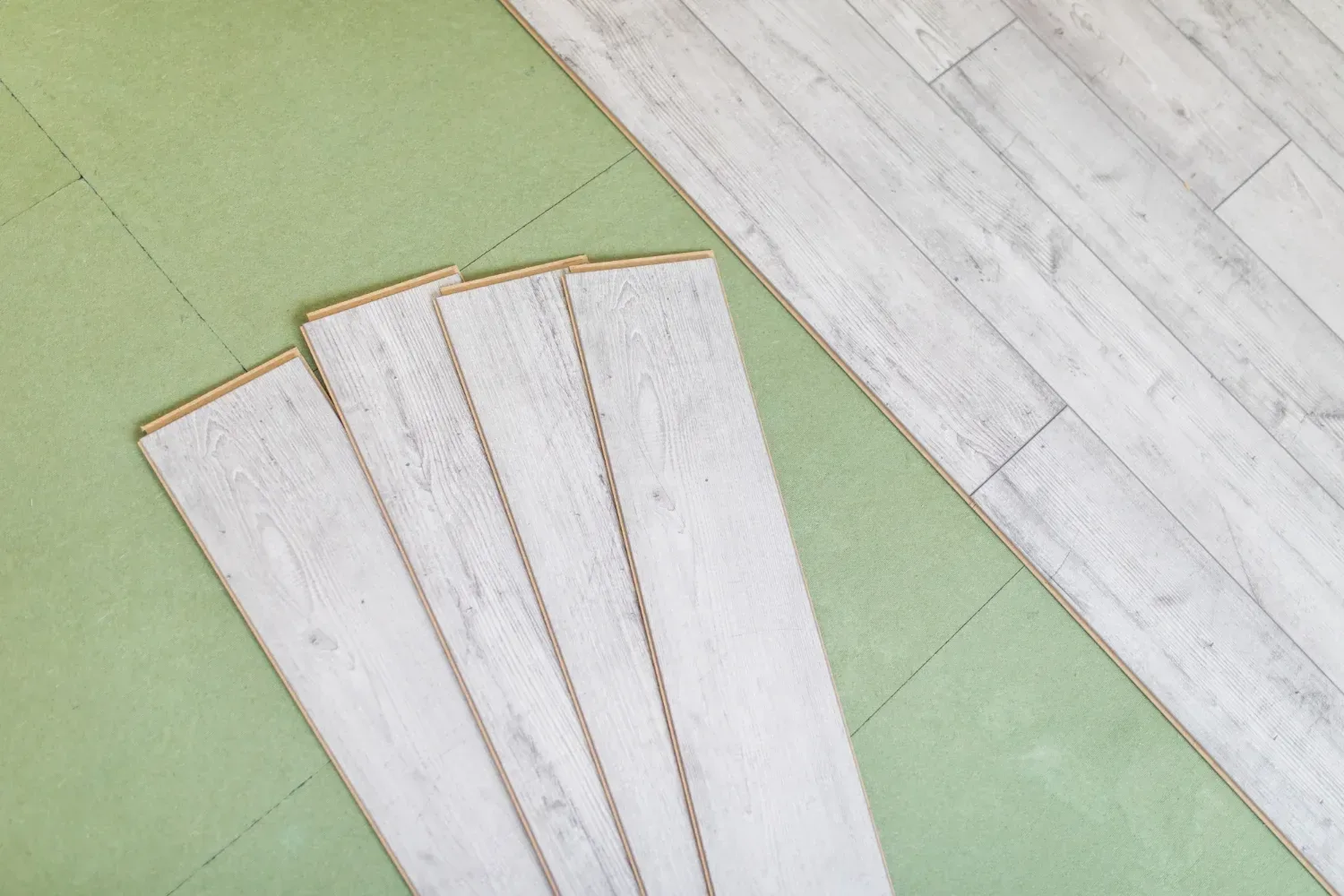
Beneath parquet flooring lie layers that protect the material from moisture, reduce walking noise, and help the flooring remain stable over time. If these layers are missing or chosen incorrectly, problems emerge such as squeaking, movement between planks, or warping.
Choosing the right materials for under parquet depends on the flooring type, installation method, and room conditions. Below are explanations for each layer installed beneath parquet and the conditions in which it is used.
What Goes Under Parquet, at a Glance
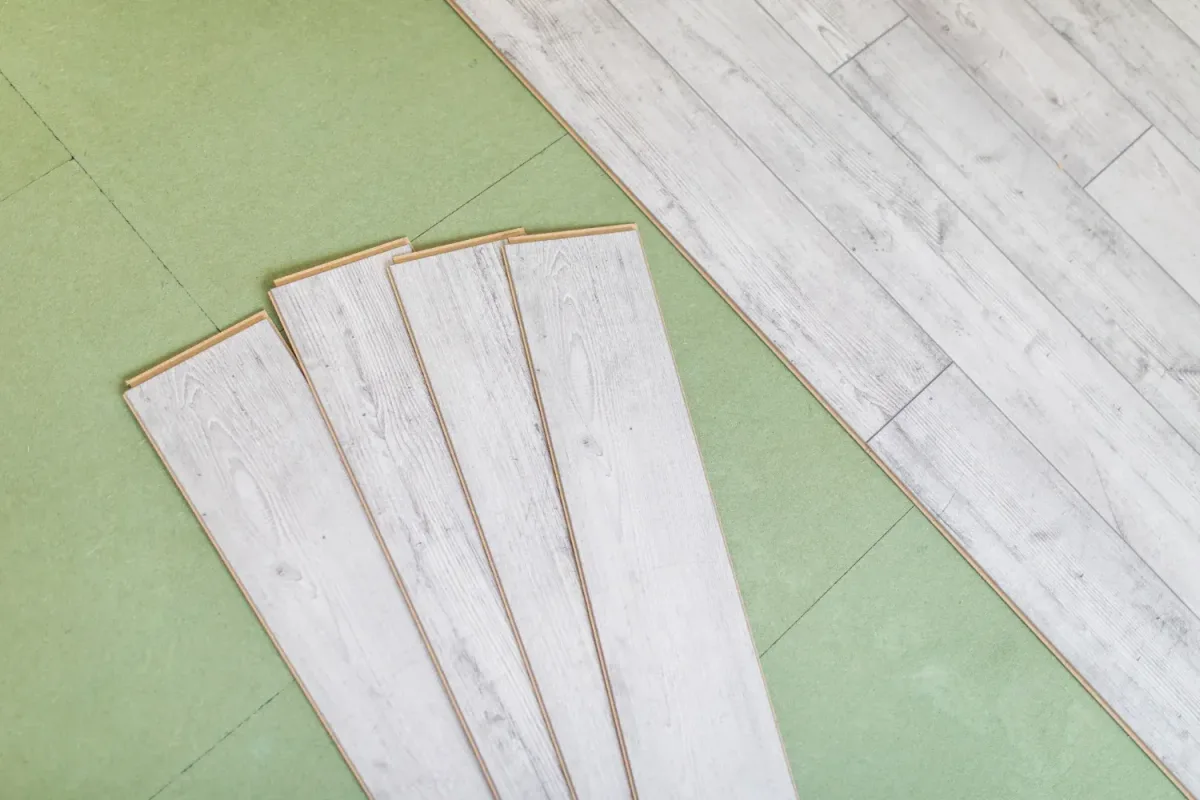
The layers installed beneath parquet vary depending on the material chosen and installation method. Each category has its own requirements, and these differences become particularly important when discussing parquet types installed floating, glued, or installed over underfloor heating systems.
The table below quickly summarizes what is installed under each parquet type and the role of each layer.
What Is Parquet Insulation?
Why Is Parquet Insulation Important?
Parquet insulation is the layer installed between the parquet and the base support (screed, concrete, or OSB). This layer is invisible after installation, yet it directly influences the stability and comfort of the flooring.
Its role is to create a stable foundation for the flooring and to control how parquet reacts to moisture, noise, and temperature variations.
Without properly chosen insulation, parquet becomes vulnerable. Moisture from the support can penetrate the planks. Footstep noise is amplified. Small imperfections in the screed transfer to the surface. Over time, squeaking, instability, or warping appear.
Proper insulation protects parquet from vapors, increases walking comfort, reduces noise between floors, and contributes to a longer lifespan of the flooring.
Types of Materials Used for Parquet Insulation
Each material has a precise role, from moisture protection, walking comfort, noise reduction, to controlling heat transfer.
How Do You Choose the Best Insulation Under Parquet for Your Project?
There is no single universal insulation variant that works in every situation. The best insulation under parquet is one adapted to real conditions in the space: parquet type, humidity level, flooring structure, and comfort expectations.
The right choice begins with a few simple questions. Where is the residence located? Is there a risk of moisture? Is underfloor heating installed? Does sound insulation matter? Is the parquet floating or glued?
Below are the most common scenarios and suitable solutions for each.
How to Correctly Install the Substrate Under Parquet
Installing the substrate directly influences parquet stability, walking comfort, and moisture protection. Careful installation prevents squeaking, warping, and premature wear.
What Goes Under Parquet in Underfloor Heating
Underfloor heating completely changes installation rules. In this system, parquet is exposed daily to heating and cooling cycles, especially during winter. The support layer must allow efficient heat transfer while protecting the material from residual moisture in the support.
What Film Is Used Under Parquet in Underfloor Heating?
What Should Be Avoided?
The film used acts as a vapor barrier. It is installed directly over the screed, before the substrate.
For this system, use:
- polyethylene film of minimum 0.2 mm thickness
- overlapped and sealed joints
- continuity across the entire surface
The film's role is to stop vapors that may rise from the screed during heating cycles. This protection remains necessary even when the screed appears completely dry.
A special substrate for heat transfer is installed over the vapor barrier film.
Recommended characteristics:
- reduced thickness
- controlled density
- total thermal resistance below 0.15 m²K/W
- manufacturer-declared compatibility for heated flooring
This type of substrate allows heat to reach the surface quickly, without local temperature accumulations under the parquet.
In this system, avoid:
- very thick substrates
- materials with high thermal insulation
- thick uncertified cork for heated flooring
- overlapping multiple insulating layers
These solutions reduce heat transfer and can cause temperature variations in parquet.
Checklist Before Installation
- ☐ Screed completely dry and cured
- ☐ Support moisture verified
- ☐ Vapor barrier installed continuously
- ☐ Substrate certified for underfloor heating
- ☐ Expansion joints respected
- ☐ Parquet acclimated in the room before installation
Tips for Choosing and Installing Substrate for Parquet
One first aspect concerns compatibility between substrate and parquet type. Laminate, engineered, or triple-layer parquet have different requirements. It is important that the substrate be explicitly recommended by the manufacturer for that type of flooring.
Real conditions in the space also matter. On ground floor or over basements, a vapor barrier becomes essential. In apartments, sound insulation deserves priority. In homes with underfloor heating, the substrate must be chosen for efficient heat transfer.
The support layer deserves careful inspection before installation. A damp screed or an uneven surface compromises any substrate, regardless of its quality. Proper base preparation saves future repairs.
On concrete or screed, polyethylene film remains mandatory. It is one of the most frequent omissions encountered on job sites.
Another important detail is the expansion joint. No matter how good the substrate is, lack of working space for parquet leads to internal stresses and warping over time.
Finally, clean installation, without wrinkles in the substrate and without thick overlaps, provides stability and uniform appearance of the flooring.
If you want to choose the engineered parquet suitable for your project, ask the Kulttur consultants for a recommendation.
Common Mistakes in Installing Parquet Insulation
Many of the problems that appear later in flooring stem from the insulation installation stage. A wrong choice of materials or careless installation affects parquet stability, walking comfort, and behavior over time. In many cases, these errors later lead to additional repair costs or even the phenomenon of swollen parquet.
Overlapping Multiple Insulating Layers
Omitting the Vapor Barrier
Choosing an Unsuitable Substrate Thickness
Installation on Unsuitable Surfaces
Choosing Substrate Based on the Rule: Thicker Means Better
Ignoring Compatibility with Parquet Type and Installation System
Installing multiple substrates one on top of another seems like a good idea for added comfort. In reality, the flooring becomes unstable. Planks move excessively when walking, and joints wear out faster. In underfloor heating, heat transfer decreases considerably.
Vapor protection film remains essential on mineral supports. Without this layer, residual moisture from the screed slowly migrates toward the parquet. Over time, warping, joint separation, or raised areas caused by parquet swelling appear.
A substrate that is too thin does not attenuate noise and does not accommodate small irregularities in the support. A substrate that is too thick allows excessive movement of the planks. Both situations affect flooring stability.
Damp, dirty, or greasy support compromises any installation system. Dust and residue prevent even substrate placement. Moisture from the support gradually reaches the parquet, regardless of the quality of materials chosen.
Comfort is not achieved through excessive thickness. Especially in underfloor heating, thick substrates block heat transfer and create temperature variations under the parquet.
Each parquet has clear requirements regarding the accepted substrate. Material chosen without considering floating or glued installation affects joint behavior and may void the product warranty.
Frequently Asked Questions About Substrate Under Parquet
How Do I Choose What Material to Put Under Parquet?
The choice starts with three things: parquet type, support structure, and room conditions. Laminate parquet needs substrate with vapor barrier. Engineered parquet allows more options, depending on desired comfort. On ground floor or over basements, vapor film becomes mandatory. In apartments, sound insulation matters. In homes with underfloor heating, the substrate must be chosen for efficient heat transfer.
Why Must I Consider Insulation Under Parquet in Underfloor Heating?
Because the substrate directly influences system efficiency. Materials that are too thick or highly insulating reduce heat passage to the surface. A substrate certified for heated flooring maintains uniform temperature and protects parquet from internal stresses produced by thermal cycles.
What Goes Under Triple-Layer Parquet?
In floating installation of triple-layer parquet, a vapor barrier is used, followed by substrate made of polyurethane foam, thin cork, or substrate dedicated to underfloor heating. In glued installation, primer and elastic adhesive are applied directly to the screed. The choice depends on the installation system recommended by the manufacturer.
Can I Install Parquet Directly Over Old Tiles?
Yes, if the tiles are stable, perfectly fixed, and leveled. In this case, a vapor barrier and cushioning substrate are installed, then floating parquet. If the tiles show irregularities or detached pieces, the support must be corrected first.
What Film Is Used Under Parquet?
On mineral support, polyethylene film is used as a vapor barrier, typically with a minimum thickness of 0.2 mm. Films are overlapped and sealed for complete surface continuity.