Hinge Adjustment
Although they are small components that are often unseen, hinges for interior doors are essential elements. There are various aspects you should consider, not only when selecting hinge sets, but also when they require repair or adjustment that can be done quickly and easily.
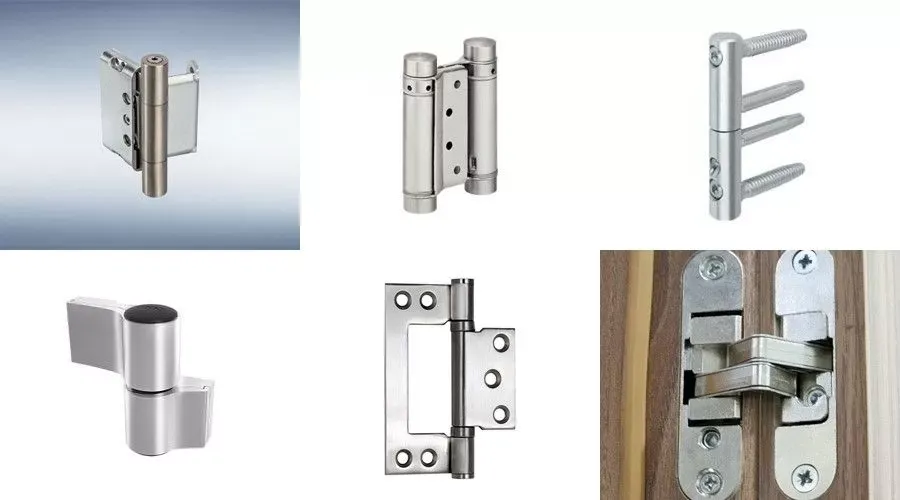
1. General Characteristics of Hinges – Definition, Role, and Types
2. Most Common Problems and Correct Hinge Adjustment
2.1. Squeaking and Hinge Adjustment for Doors (Metal, Wood, etc.)
2.2. Difficult Door Opening
2.3. Incomplete Door Closure
1. General Characteristics of Hinges - Definition, Role, and Types
2. Most Common Problems and Correct Hinge Adjustment
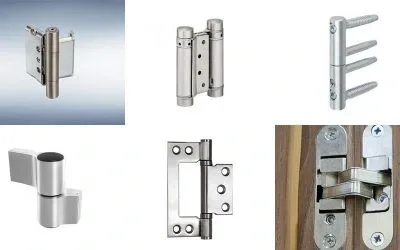
A hinge is an essential component of both furniture pieces and doors, windows, and articulated mechanical systems. It comes in various shapes, sizes, and colours, manufactured from a wide range of materials and special alloys. Depending on certain characteristics, this component is classified into different categories:
A. By method of attachment:
- Surface-mounted hinges;
- Mortised hinges;
- Semi-mortised hinges;
- Built-in hinges.
B. By fastening system to/on support:
- Thread fastening;
- Screw/nail fastening;
- Support press fitting.
C. Specific characteristics:
- Wing hinges / Butterfly hinges / Plate hinges;
- Throwing hinges;
- Threaded rod hinges;
- Ornamental hinges;
- Invisible hinges (recessed);
- Ball bearing hinges;
- Swing hinges;
- Folding hinges.
D. Hinge selection should be made considering certain aspects, such as:
- The material on which it will be mounted (especially for subsequent adjustment of metal or wooden door hinges);
- The alloy from which the component is manufactured;
- The fastening system;
- Dimensions and shape;
- Frequency of door use (and implicitly hinge wear);
- Integration with interior design (if visible, it should match the support on which it is mounted, with the flooring and other hinges in the room).
A. Squeaking and Hinge Adjustment for Doors (Metal, Wood, etc.)
One of the most unpleasant aspects of a faulty hinge is squeaking. To remedy this situation, you need to disassemble the hinges, checking if they are damaged, but also if they have sufficient lubrication so that the components slide smoothly. Adjusting hinges on metal doors, just as with wood or other materials, in most cases does not require much time or effort. You need to tighten the fastening screws of the hinge plates and components better, also using vaseline to prevent wear damage to the component.
B. Difficult Door Opening
If the door no longer opens as easily and you feel unusual resistance, it is possible that the hinge itself has failed, or its fastening has loosened. Therefore, a simple and quick general check is needed:
- Remove the door from the frame;
- Detach the hinges from the nails/screws;
- Clean them of paint (if necessary), debris, and straighten them if needed;
- Returning to the door and frame, check the holes where the hinge was fastened, and where necessary, fill the space by adding plugs or splinters (wood is often used);
- Reinstall the hinge using new nails/screws, and also mount the interior door.
C. Incomplete Door Closure
Often, difficult and sluggish closure of interior doors is caused by rusted or faulty hinges. However, these are not the only causes, as the problem can also be due to:
- Incorrect door installation;
- Difference in door dimensions compared to frame dimensions (the closing system cannot be used properly);
- Loosening of the fastening system/hinges.